
Fall Prevention for Seniors: A Comprehensive Guide
Falls are a major safety concern for older adults, often affecting their mobility, independence, and quality of life. This comprehensive guide explores common fall risks, practical prevention strategies, home safety improvements, and exercises that can help seniors stay steady, confident, and safe in their daily lives.
Why Falls Are Dangerous for Seniors
Falls can have serious consequences beyond physical injuries, including fractures, head injuries, and a loss of confidence when performing everyday activities. Many older adults become afraid of falling again, which may lead them to limit movement and social activities. This reduced activity can further weaken muscles, affect balance, and increase the risk of future falls.
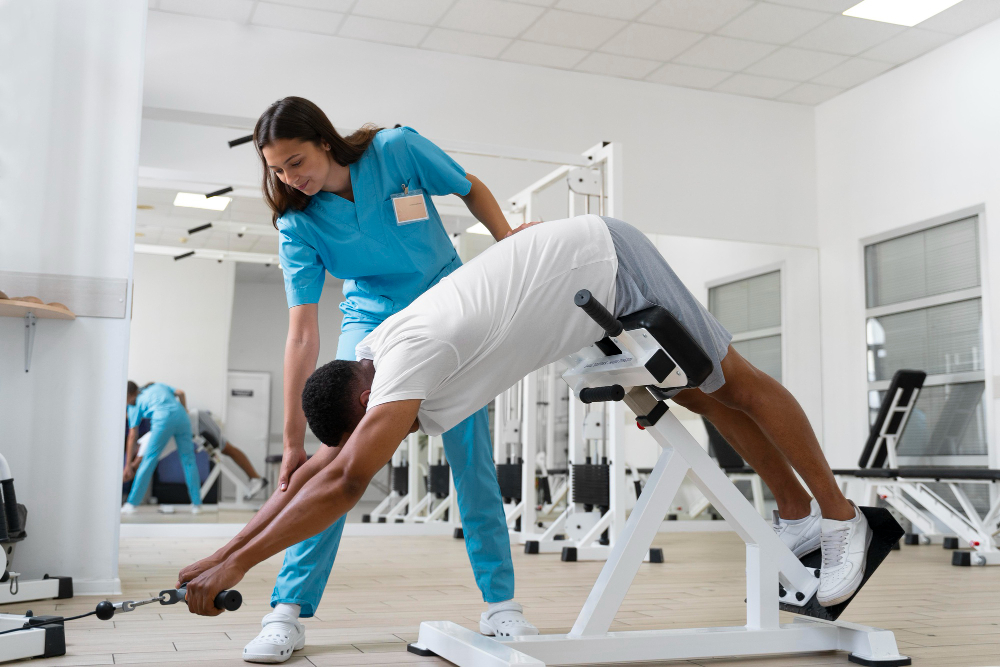
Consequences of a Fall Include:
| Consequence | Description |
| Hip fractures | Require surgery and long rehabilitation; 25% of seniors die within one year after a hip fracture |
| Head injuries | Traumatic brain injury (TBI) can cause permanent cognitive or physical disability |
| Loss of independence | Many seniors never return to living alone after a serious fall |
| Fear of falling | Leads to activity restriction, muscle weakness, and social isolation – creating a vicious cycle |
Early prevention is far more effective than treating fall-related injuries (Geriatric Safety Guidelines, 2020).
Common Causes of Falls
Falls rarely have a single cause. Most result from an interaction of intrinsic (personal) and extrinsic (environmental) factors.
| Category | Specific Causes |
| Physical | Muscle weakness, poor balance, gait disorders, vision loss, hearing loss |
| Medical | Low blood pressure, dizziness, diabetes, arthritis, Parkinson’s disease, stroke history |
| Medication | Sedatives, antidepressants, blood pressure drugs, muscle relaxants (polypharmacy is a major risk) |
| Environmental | Loose rugs, poor lighting, clutter, lack of grab bars, slippery floors |
| Behavioral | Rushing to the bathroom at night, wearing loose slippers, improper use of walking aids |
A study by Thompson & Lee (2019) found that 60% of falls occur inside the home, with the bathroom and bedroom being the most dangerous locations.
Fall Risks After Age 65
| Age Group | Primary Risk Factors |
| 65–74 | Reduced reaction time, beginning vision changes (cataracts), medication side effects |
| 75–84 | Muscle mass loss (sarcopenia), impaired balance, increased prevalence of chronic diseases |
| 85+ | High prevalence of cognitive impairment, multiple medications, frailty syndrome, home environmental hazards |
Age-related changes increase fall risk progressively. The following table summarizes key risk factors by age group.
Annual fall risk screening is recommended for all adults aged 65 and older (American Geriatrics Society, 2021). Screening tools include the Timed Up and Go (TUG) test: if a senior takes 12 seconds or longer to stand from a chair, walk 3 meters, turn, and return, fall risk is elevated.
Home Safety Improvements
A home safety assessment is the single most effective intervention to reduce falls. Focus on the following areas.
| Area | Action |
| Floors | Remove all loose rugs; secure carpet edges; no electrical cords across walkways |
| Stairs | Install handrails on both sides; add non-slip treads; ensure top and bottom steps are marked with contrasting tape |
| Lighting | Increase wattage in all rooms; add night lights in hallways and bathrooms; use motion-sensor lights |
| Kitchen | Store frequently used items at waist level; use a sturdy step stool with handrail |
| Living room | Arrange furniture to create wide walking paths; raise low chairs or use risers |
General Home Safety Checklist
Bathroom Safety Tips
The bathroom is the highest-risk room. Up to 80% of falls in the home occur in the bathroom (Chen & Williams, 2018).
Essential Bathroom Modifications
| Safety Feature | Purpose |
| Grab bars near toilet and inside shower/tub | Provide support for sitting, standing, and transferring |
| Non-slip bath mat (inside and outside tub) | Prevents feet from sliding |
| Shower chair or bench | Allows seated bathing |
| Handheld showerhead | Enables showering from a seated position |
| Raised toilet seat with arms | Reduces squat depth and provides push-off support |
| Water temperature regulator (anti-scald) | Prevents burn-related falls from sudden hot water |
| Night light (motion-activated) | Illuminates the path without reaching for switches |
Warning: Towel racks and soap dishes are not designed as grab bars. Install professionally mounted grab bars rated for at least 250 pounds (Falls Prevention Alliance, 2020).
Bedroom Safety Checklist
Many falls occur when seniors get out of bed, especially during the night. Use the following checklist.
| Item | Done? |
| Bed height allows feet to touch floor when sitting | ☐ |
| Path from bed to bathroom is clear of cords, rugs, and furniture | ☐ |
| Nightlight illuminates the entire path | ☐ |
| The lamp or light switch is reachable from the bed | ☐ |
| The telephone and emergency call device are on the bedside table | ☐ |
| The floor is non-slip (no loose rugs) | ☐ |
| Shoes or slippers with non-slip soles are placed beside bed | ☐ |
| A bedside commode is available for seniors with urgency | ☐ |
| A bed rail or bed handle (floor-to-ceiling pole) assists with getting up | ☐ |
When to Refer to Physical Therapy
Seniors with a history of falls or significant gait abnormalities should receive a formal balance assessment and supervised exercise program from a physical therapist (Harrison & Lee, 2020).
Basic Exercises for Seniors: Strength, Flexibility, and Endurance
In addition to balance training, seniors need basic exercises that maintain muscle strength, joint flexibility, and cardiovascular endurance. These exercises directly reduce fall risk by improving the ability to catch oneself, rise from a fall, and walk safely (Anderson & Patel, 2019).
Types of Basic Exercises
| Type | Purpose | Examples | Frequency |
| Strength | Maintain muscle mass to support joints and prevent weakness | Arm curls, seated leg lifts, wall push-ups | 2–3 days/week |
| Flexibility | Keep joints mobile; reduce stiffness that causes tripping | Neck turns, shoulder rolls, hamstring stretch | Daily |
| Endurance | Improve stamina for daily activities (shopping, stairs) | Walking in place, stationary cycling, seated marching | 5 days/week |
1. Basic Strength Exercises (With Chair Modifications)
| Exercise | How to Do It | Repetitions | Modification for Weakness |
| Seated leg lift | Sit upright, straighten one leg, hold 3 seconds, lower | 10 for each leg | Start with ankle weights (1–2 lbs) |
| Chair squat | Stand up from the chair using your arms, then sit back down slowly | 5–10 | Use higher chairs or armrests |
| Arm curl | Hold light weights (1–3 lbs), bend elbow to bring hand to shoulder | 10–15 each arm | Use canned goods or water bottles. |
| Wall push-up | Stand at arm’s length from the wall, lean in, and push back | 8–12 | Move closer to the wall for less resistance |
| Seated row | Hold the resistance band, pull elbows back, and squeeze shoulder blades | 10–15 | Use no band; just mimic motion |
| Heel/toe raises | While seated, lift heels, then lift toes | 15 each | Hold the chair for balance if standing |
2. Basic Flexibility Exercises
| Exercise | How to Do It | Duration | When to Do |
| Neck turn | Slowly turn head left, then right | Hold 5 seconds each side | Morning after waking |
| Shoulder roll | Roll shoulders forward 5x, then backward 5x | 10 total | Before any activity |
| Seated forward bend | Sit, slowly bend forward toward knees, slide hands down legs | Hold 15 seconds> | After chair exercises |
| Ankle circle | Lift foot, rotate ankle clockwise then counterclockwise | 10 circles each foot | Before walking |
| Hamstring stretch (seated) | Extend one leg, lean forward gently from hips | Hold 20 seconds each leg | Evening before bed |
3.Basic Endurance (Aerobic) Exercises
| Activity | How to Do It | Duration | Progression |
| Walking in place | Lift knees high, swing arms | 5 minutes → 20 minutes | Increase time, not speed |
| Seated marching | Sit upright, march feet alternately | 2 minutes → 10 minutes | Add hand weights |
| Stationary cycling | Use recumbent or upright exercise bike | 5 minutes → 30 minutes | Increase resistance slowly |
| Arm circles (seated) | Extend arms sideways, make small circles | 1 minute → 5 minutes | Increase circle size |
Sample Weekly Exercise Schedule for Seniors
| Day | Morning (10 min) | Afternoon (10–15 min) | Evening (5 min) |
| Monday | Balance exercises | Strength (legs + arms) | Flexibility (neck, shoulders) |
| Tuesday | Walking in place (endurance) | Balance exercises | Ankle circles + hamstring stretch |
| Wednesday | Seated marching | Strength (chair squats + wall push-ups) | Flexibility (full body) |
| Thursday | Balance exercises | Walking outside (if safe) or stationary cycling | Shoulder rolls + neck turns |
| Friday | Strength (leg lifts + arm curls) | Balance exercises | Seated forward bend |
| Saturday | Walking in place or outdoor walk | Flexibility (all stretches) | Relaxation breathing |
| Sunday | Rest or gentle chair yoga | Balance exercises (easy) | Light foot massage |
Golden rule :Never exercise to the point of pain. “No pain, no gain” does NOT apply to seniors. Stop immediately if you feel chest pain, severe shortness of breath, or dizziness (Geriatric Exercise Council, 2021).
Chair-Based Exercise Routine (For Limited Mobility)
For seniors who cannot stand safely, the following seated exercises provide similar benefits.
| Exercise | Instructions | Repetitions |
| Seated knee lift | Lift one knee toward chest, lower, alternate | 10 each leg |
| Seated twist | Place hands on hips, gently rotate upper body left/right | 10 each side |
| Seated punch | Punch forward with alternate arms (light weights optional) | 15 each arm |
| Seated heel dig | Extend leg, dig heel into floor, return | 10 each leg |
| Seated back squeeze | Sit tall, squeeze shoulder blades together | 15 repetitions |
| Seated ankle pump | Point and flex feet repeatedly | 20 pumps |
Do and Don’t
| Do | Don’t |
| Start with 2–3 exercises, add one new each week | Don’t push the senior beyond “moderate” effort (able to talk but not sing) |
| Use a sturdy chair without wheels | Don’t exercise on a full stomach (wait 1 hour after meals) |
| Provide verbal cueing (“lift your right leg slowly”) | Don’t ignore complaints of joint pain – modify or skip |
| Keep water nearby and offer every 10 minutes | Don’t exercise in extreme heat or cold |
| Record progress (number of repetitions, minutes walked) | Don’t compare to younger or fitter individuals |
Practical Tips (Grab Bars, Lighting, Rugs, Walking Aids)
1.Install Grab Bars
| Location | Type of Grab Bar | Mounting |
| Shower/tub | 12–18 inch vertical or angled bar | Wall studs or heavy-duty anchors |
| Toilet area | 24–36 inch horizontal bar | Wall-mounted behind toilet + side bar |
| Bathroom doorway | 12 inch vertical bar | Assist with step over threshold |
2. Improve Lighting
| Area | Recommended Lighting |
| Hallways | Night lights every 6–8 feet |
| Stairs | Bright overhead + top and bottom light switches (3-way) |
| Bathroom | Motion-sensor night light at floor level |
| Bedroom | Lamp within arm’s reach; avoid glare on floors |
3. Remove Loose Rugs
Loose rugs cause nearly one-third of home falls (Matsumoto et al., 2019).
Solutions:
- Remove all throw rugs and bath mats that are not double-sided taped down
- Replace with non-slip rugs or carpet tiles
- Secure any remaining rugs with heavy-duty double-sided tape or rubber backing
4. Use Walking Aids Correctly
| Device | Common Mistake | Correction |
| Cane | Used on weak side | Cane held in opposite hand of weak leg; advanced with weak leg |
| Walker | Walker too low or high | Handles at wrist crease when standing; elbows slightly bent |
| Rollator (wheeled walker) | Using without locking brakes when sitting | Always lock brakes before transferring |
Tip: A physical therapist or pharmacist can review if medications (e.g., sedatives, blood pressure drugs) are affecting gait and balance.
How Caregivers Can Help
Caregivers play a critical role in preventing falls. Structured routines, home modifications, and vigilant monitoring reduce fall risk significantly (Nguyen et al., 2021)
Daily Caregiver Actions
| Action | Purpose |
| Perform a morning safety sweep (clear pathways, check lighting) | Remove overnight hazards |
| Remind senior to wear non-slip shoes before standing | Prevent slips |
| Offer toileting every 2–3 hours (day) and before bedtime | Reduce nighttime urgency and rushing |
| Supervise balance and basic exercises | Ensure correct form and prevent injury |
| Review medications monthly | Identify new dizziness-causing drugs |
Home Safety Audit (Quarterly)
Caregivers should conduct a room-by-room safety audit using the checklists above.
Pay special attention to:
- Worn bath mats (replace)
- Loose electrical cords (tape down or reroute)
- Low-wattage bulbs (increase to 60–100 watts)
- Chair height (should allow feet flat on floor)
Monitoring for Fall Warning Signs
| Warning Sign | Possible Action |
| Shuffling gait or reduced step height | Physical therapy referral; check footwear |
| Holding onto walls or furniture for support | Home safety assessment; consider cane/walker |
| Complaints of dizziness when standing | Check blood pressure (orthostatic hypotension); review meds |
| Recent unexplained bruising | Silent falls may have occurred; assess balance |
| Fear of walking or activity restriction | radual exposure with support; basic exercises |
Caregivers should watch for these changes that predict a fall:
After a Fall: Caregiver Response
If a senior falls:
- Do not rush to lift them – check for injury (pain, deformity, head impact).
- If able to get up, use a sturdy chair and assist slowly.
- If unable to get up, keep them warm and call emergency services.
- Report the fall to the primary care provider within 24 hours – even if no visible injury.
- Review the circumstances – What caused it? Loose rug? Dizziness? Rushing? Modify accordingly.
A fall is often the first sign of a new medical problem (e.g., urinary tract infection, dehydration, medication toxicity). Never dismiss a fall as “just an accident” (Geriatric Care Guidelines, 2022).
Conclusion
Falls are not an inevitable part of aging. With a combination of home safety improvements, basic exercises (strength, flexibility, endurance), balance training, proper footwear, and caregiver support, most falls can be prevented. The most effective approach is proactive: assess the home, strengthen the body, and build daily safety habits.
Key takeaway: A single fall can change a senior’s life forever. But simple, low-cost changes – removing a rug, installing a grab bar, wearing the right shoes, and exercising daily – save lives.
Frequently Asked Questions (FAQs)
1. Why are elderly adults more prone to falls?
Poor eyesight, low muscle strength, difficulty balancing, and other ailments caused by old age contribute to the risk of falling.
2. Which factors cause falls among older people?
The major causes include muscle weakness, loss of balance, medication side effects, poor eyesight, slippery floors, dim lighting, and obstacles.
3. In what ways can older people prevent themselves from falling?
It is possible to avoid falls by tidying up, installing grab bars, ensuring adequate lighting, using non-slip pads, and keeping often-used items within reach.
4. Is it possible to prevent falls through physical activity?
Yes, indeed. Regular walking exercises, tai-chi, and physical therapy sessions can reduce falls significantly.
5. What conditions lead to falls?
There could be medical conditions that increase the possibility of falls, which include osteoporosis, Parkinson’s disease, diabetes, stroke, arthritis, and conditions related to dizziness.
6. Do some medicines contribute to a higher risk of falling down?
Yes. Some medicines can cause hypotension, feeling sleepy, or dizzy, making one prone to falling down. It is recommended that you check your medications regularly.
7. What is the frequency of eye check-ups that senior citizens should follow?
Correct any eye conditions that can result in a person falling down at least once a year, or even more as recommended by a healthcare expert for eyes.
8. What is the right action after a fall?
Even without apparent injury, try to be calm, assess whether you got injured, seek help when needed, and report it to a doctor.
9. Is it possible to use technology to prevent falls?
Yes. Properly fitted handrails, canes, or walkers can reduce the likelihood of accidents.
10. Under what circumstances does an elderly person require professional assistance regarding preventing falls?
It is recommended that one visits a doctor or a physiotherapist if they have experienced falls, feel unsteady while walking, or have balance problems.
References
https://www.cdc.gov/healthy-aging/
- CDC – Physical Activity Guidelines for Older Adults
https://www.cdc.gov/physical-activity-basics/guidelines/older-adults.html
- National Institute on Aging (NIA) – Healthy Aging
https://www.nia.nih.gov/health
- National Institute on Aging – Exercise and Physical Activity
https://www.nia.nih.gov/health/exercise-and-physical-activity
- National Institute on Aging – Caregiving
https://www.nia.nih.gov/health/caregiving
- National Institute on Aging – Alzheimer’s Caregiving
https://www.nia.nih.gov/health/alzheimers-and-dementia/caregiving
- MedlinePlus – Senior Health
https://medlineplus.gov/seniorshealth.html
- MedlinePlus – Healthy Aging
https://medlineplus.gov/healthyaging.html
- Administration for Community Living (ACL)
https://acl.gov/
- National Council on Aging (NCOA)
https://www.ncoa.org/
- Choose MyPlate – Older Adults
https://www.myplate.gov/life-stages/older-adults
- American Geriatrics Society
https://www.americangeriatrics.org/
- Alzheimer’s Association
https://www.alz.org/
- Family Caregiver Alliance
https://www.caregiver.org/
- Mayo Clinic – Healthy Aging
https://www.mayoclinic.org/healthy-lifestyle/healthy-aging
- Cochrane Library
https://www.cochranelibrary.com/